



Quantifying global dimensions of resilience

Find out more about the different routes to entry and our eligibility criteria

Madagascar was home to diverse megaherbivores including dwarf hippopotami, giant tortoises, lemurs and ratites. Their extinction 1000 years ago has removed key ecosystem functions, including regulators of endemic grasses. The introduction of a widespread free-ranging pastoral system using zebu has been assumed to be bad for ecosystem health, yet their potential for ecological function replacement has not been assessed. Conservation and restoration activities in Madagascar remain focussed on forests leaving ancient grasslands behind. There is no common definition of what “rewilding” means in practice.
Kew Madagascar has developed a body of knowledge on Madagascar’s open ecosystems and endemic grasses, documenting both fire and grazing driven ecosystems, but the effects of different ancient versus modern grazers are not yet understood. This project will be an interdisciplinary collaboration using botanical, zoological, and palaeontological data to guide trophic rewilding practice.
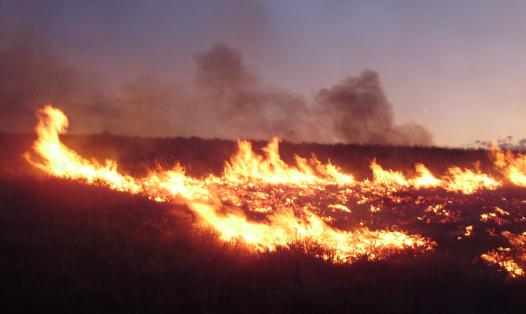
What defunct ecological roles can be replaced by zebu? Can managed grazing by zebu reduce fires and help open ecosystems recover plant diversity? To reassemble past plant-animal interactions research will focus on combining a biomechanical and isotopic trait-based approach to identify specific roles within the megaherbivore community in their capacity as grazing species, as cropping, bulk, lawn, or selective grazers; with each of these roles having differential roles in driving ecological composition. This will also be constructed for extant zebu and using skeletal remains from the archaeological record. Plant functional traits will be analysed using Global Grassy Group plot plant assemblage data.
Maria Vorontsova will provide training on plant identification and trait assessment using collections from Madagascar held at the Royal Botanical Gardens, Kew, in London. James Hansford will provide training on the zoological assessment and statistical approaches. Both supervisors will introduce the student to their extensive professional networks both in Madagascar and internationally.
This project will build professional experience in designing and assessment of rewilding, ecological restoration, and climate friendly pastoral system management. The student will gain understanding of grazing and trophic ecology building pathways to ecosystem management careers worldwide. This work will also build links to work with livestock systems especially in the tropics.
This project includes potential fieldwork in Madagascar involving ecological surveys, sample collection and engagement with pastoral communities. Overseas travel, remote field locations, uneven terrain, high temperatures and extended time away from home may present challenges for applicants with disabilities, long-term health conditions or caring responsibilities.
The project can also be undertaken without overseas fieldwork. The central research questions can be addressed using herbarium collections held at the Royal Botanic Gardens, Kew, museum collections, archaeological specimens, existing isotopic datasets, Global Grassy Group vegetation data, remote sensing products and computational trait-based analyses. A student unable to undertake overseas fieldwork would therefore still be able to complete a scientifically robust PhD project with clear opportunities for publication, training and professional development.
Where field participation is desired, reasonable adjustments may include shorter field visits, flexible timing, additional field assistance, adapted workloads, accessible accommodation where available, and focusing on selected project components rather than all field activities.
Laboratory and collection-based work will be undertaken in accessible facilities at participating institutions. Reasonable adjustments may include modified laboratory practices, flexible working patterns, technical support, adapted equipment where required, and other accommodations identified through discussion with university support services. Adjustments will be agreed individually with the student.