



Quantifying global dimensions of resilience

Find out more about the different routes to entry and our eligibility criteria
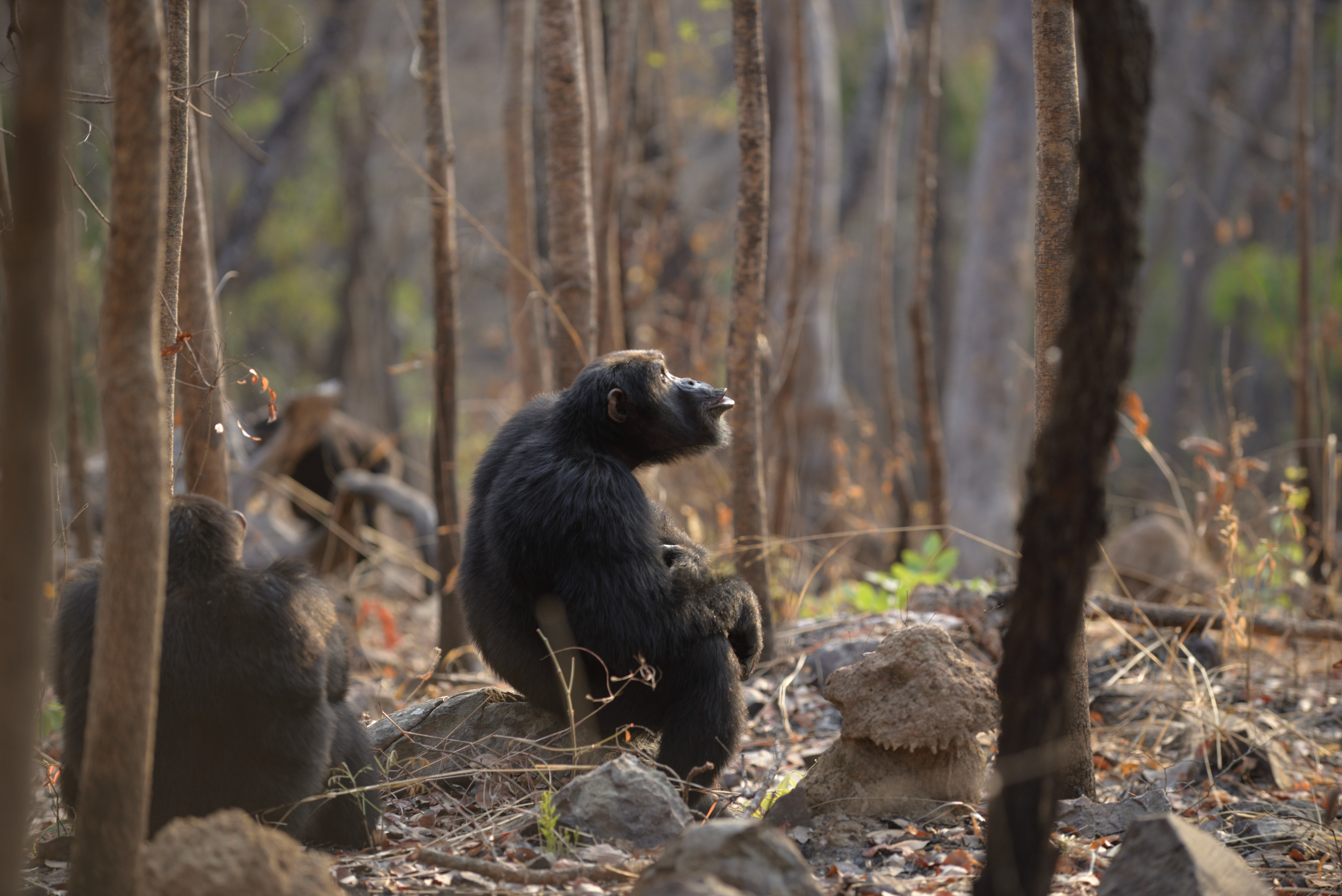
We are seeking a highly motivated PhD candidate to investigate the role of wild chimpanzees in shaping and responding to complex tropical forest soundscapes in western Tanzania using passive acoustic monitoring. The project will combine bioacoustics, behavioural ecology, and conservation ecology to examine how chimpanzee (and sympatric wildlife) vocal activity interacts with other biological and environmental sounds across a human-impacted landscape. By developing innovative acoustic approaches to monitor chimpanzees and ecosystem health, the research will provide new insights into wildlife communication, biodiversity assessment, and the conservation of endangered great apes in a rapidly changing environment.
The student will receive interdisciplinary training through one-to-one supervision, field mentoring, and external collaborations. At the Tanzanian field site, they will be trained in biodiversity surveys, acoustic identification and data collection, behavioural observations of wild primates, and phenology monitoring.
This project will provide training and experience relevant to a wide range of academic and professional careers at the interface of bioacoustics, ecology, evolution, conservation and sustainable resource management. Within academia, the student will be well positioned for postdoctoral research and independent careers in acoustic ecology, tropical biodiversity, primate ecology, conservation biology, biodiversity monitoring, and environmental science. The combination of field ecology, biodiversity monitoring, quantitative analysis and international collaboration will provide a strong foundation for competitive research positions and future academic leadership.
Beyond academia, the project will support careers in biodiversity conservation, environmental policy, ecological consultancy, and broadly, natural resource management. Expertise in fungal biodiversity assessment, environmental genomics and ecosystem monitoring is increasingly relevant to conservation organisations, museums, botanical gardens, environmental agencies and biodiversity monitoring programmes. Experience working with local communities and integrating scientific and traditional ecological knowledge will prepare the student for roles in community-based conservation, sustainable livelihoods and science-policy engagement.
The project will also develop transferable skills valued across sectors, including project management, data science, stakeholder engagement, scientific communication, grant writing and international research coordination. Partnerships with organisations such as GMERC in Tanzania, fungal research institutions and conservation networks will provide professional networks and practical experience, enabling graduates to pursue diverse careers addressing global challenges in biodiversity loss, climate change and ecosystem resilience.
I recognise that field-based ecological research can present particular challenges in terms of physical accessibility, working hours, travel, and the location of research activities. I will discuss individual circumstances with prospective students and consider reasonable adjustments to enable participation wherever possible.
The project will involve the analysis of acoustic recordings of chimpanzees and their forest environments, alongside associated ecological and behavioural data. While some aspects of the research may involve fieldwork in remote locations, opportunities will be explored to undertake appropriate components of the project through desk-based research, acoustic analysis, and computational approaches if fieldwork is not an option. The PI directs long-term research in Tanzania, where full-time teams of experienced research assistants could collect data in the student’s absence. There are also terabytes (!) of long-term (acoustic) data already available, which could be complemented with remotely sensed ecological/landscape data to ask questions about chimpanzees and soundscapes.
This flexibility may allow students to complete a substantial proportion of their research without needing to participate in physically demanding or extended periods of fieldwork.
I also recognise that students with caring responsibilities may need flexibility in their working patterns and research schedules. Advance planning, flexible working hours, remote working, and flexibility in scheduling meetings, training, and project milestones are all easily integrated. Any fieldwork requiring travel or an extended stay away from home will be discussed well in advance, with consideration given to whether participation can be adapted or whether equivalent research objectives can be achieved through alternative arrangements. See above for field-work replacement options.
The aim is to provide an inclusive research environment in which the successful student can make a meaningful contribution to the project’s scientific objectives while balancing their individual access requirements and personal circumstances.